
GLP Research · Metabolic
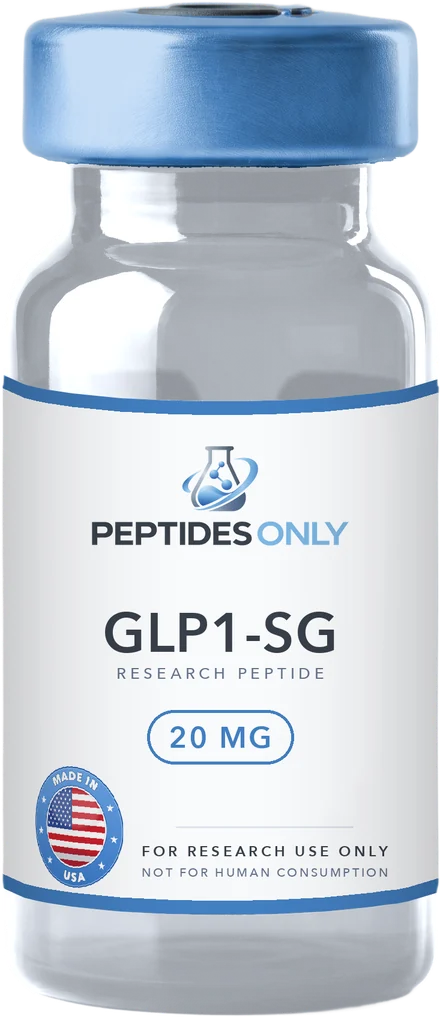
GLP1-SG
Third-party tested · COA with every order
Long-acting GLP-1 receptor agonist analogue for metabolic pathway studies.
- Independently tested
- Lot-matched COA
- Lyophilized for stability
- Ships from the USA
Research use only. Not for human or veterinary use. Sold to qualified researchers aged 21+.
$160.00
1
Lot-matched documentation. Every order ships with the certificate for its lot. If a vial arrives damaged or doesn't match its paperwork, tell us within 72 hours and we'll replace it.
Latest lab results
Third-party testedThe certificate for the current lot is being uploaded. Every order ships with the COA for its lot, or request it now.
About GLP1-SG
Long-acting GLP-1 receptor agonist analogue for metabolic pathway studies.
Supplied as
20 mg per vial, as a lyophilized powder in a sealed glass vial with a crimped cap. The lot number on the label matches the certificate of analysis in the COA library.
Storage and handling
Store lyophilized powder frozen (−20 °C) or refrigerated, sealed and away from light. Once reconstituted, keep refrigerated (2–8 °C).
Handle in a laboratory setting using appropriate protective equipment. Consult the certificate of analysis and safety data for lot-specific information.
Important research notice. This product is intended solely for in-vitro and laboratory research. It is not a drug, food, supplement or cosmetic, has not been evaluated by the FDA, and must not be used in humans or animals. Peptides Only does not provide usage or dosing information.
Research summary
GLP1-SG is a long-acting analogue of glucagon-like peptide-1 (GLP-1), a 31-residue lipidated peptide that activates the GLP-1 receptor. It is supplied for laboratory research into incretin signalling, glucose-dependent insulin secretion and the central pathways that regulate appetite and energy balance.
What is a GLP-1 receptor agonist analogue?
GLP-1 is an incretin hormone released by enteroendocrine L-cells of the intestine after a meal. Through the GLP-1 receptor, a class B G protein-coupled receptor, it amplifies insulin secretion when glucose is elevated, restrains glucagon release, slows gastric emptying and signals satiety in the brain1,2.
Native GLP-1 is cleared within minutes because dipeptidyl peptidase-4 (DPP-4) cleaves its N-terminus and the kidney filters it rapidly. Long-acting analogues such as GLP1-SG are engineered to resist that: amino-acid substitutions protect the cleavage site, and an attached fatty-acid side chain lets the peptide bind serum albumin, which markedly protracts its action in pharmacokinetic studies2,3.
What GLP-1 receptor research examines
- Pancreatic islet signalling: glucose-dependent insulin release from beta cells and suppression of glucagon from alpha cells1.
- Gut–brain signalling: GLP-1 receptors in the hypothalamus and brainstem and their role in food intake and satiety2,4.
- Gastric emptying and gut motility1.
- Cardiovascular, renal and hepatic research models, where GLP-1 receptor agonism has been studied beyond glucose control2,4.
How long-acting analogues changed the research
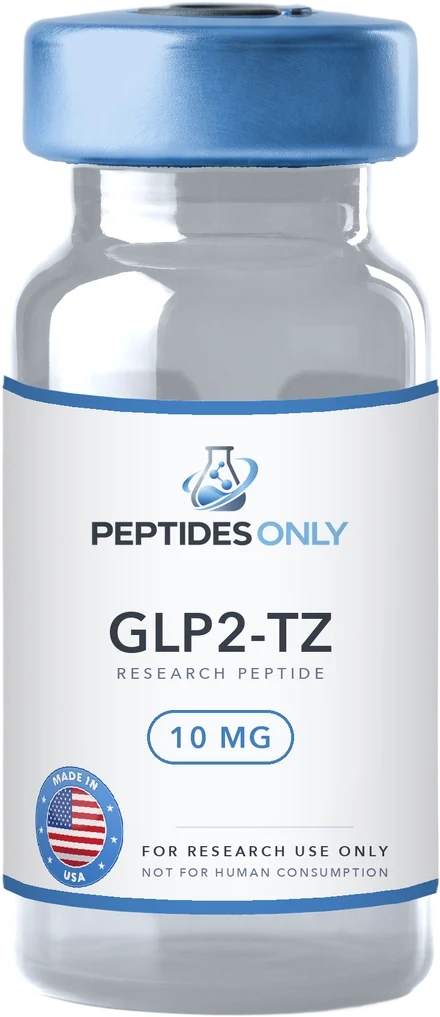
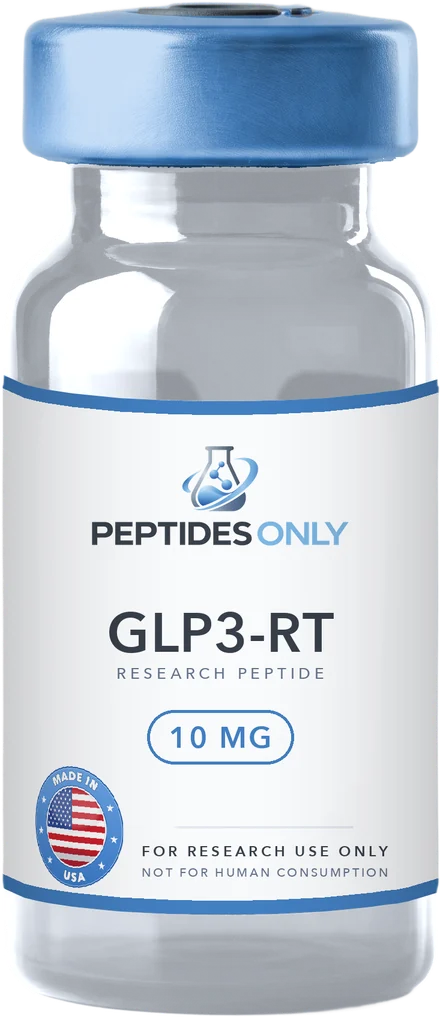
Because a long-acting analogue keeps the receptor engaged between administrations in study models, researchers can examine sustained receptor activation rather than the brief post-meal pulse of the native hormone. That has made the class a reference point for metabolic research and for newer multi-receptor compounds such as the dual GIP / GLP-1 agonist GLP2-TZ and the triple agonist GLP3-RT4.
Limitations of the evidence
Findings from receptor pharmacology, animal models and clinical studies of related medicines are not interchangeable: results depend on the exact molecule, the model and the study design. This research compound is not a medicine, has not been evaluated by the FDA, and is sold for laboratory research only.
GLP1-SG FAQ
What is the difference between GLP1-SG, GLP2-TZ and GLP3-RT?
They differ in how many receptors they act on. GLP1-SG is a GLP-1 receptor agonist; GLP2-TZ acts on both the GIP and GLP-1 receptors; GLP3-RT acts on the GLP-1, GIP and glucagon receptors.
Why does a GLP-1 analogue last longer than native GLP-1?
Native GLP-1 is cleaved by DPP-4 and cleared within minutes. Long-acting analogues protect the cleavage site and carry a fatty-acid chain that binds albumin, which slows clearance2,3.
How should a lyophilized GLP research peptide be stored?
Sealed vials of lyophilized peptide are kept frozen (−20 °C) or refrigerated, dry and away from light. Peptide storage and stability explains why.
How is each lot verified?
Every lot is tested by an independent laboratory for identity (mass spectrometry) and purity (HPLC). The certificate for the lot on your vial is published in the COA library and linked from this page.
References
- Baggio LL, Drucker DJ. Biology of incretins: GLP-1 and GIP. Gastroenterology. 2007;132(6):2131-57. PubMed 17498508
- Drucker DJ. Mechanisms of Action and Therapeutic Application of Glucagon-like Peptide-1. Cell Metab. 2018;27(4):740-756. PubMed 29617641
- Knudsen LB, Nielsen PF, Huusfeldt PO, et al. Potent derivatives of glucagon-like peptide-1 with pharmacokinetic properties suitable for once daily administration. J Med Chem. 2000;43(9):1664-9. PubMed 10794683
- Müller TD, Finan B, Bloom SR, et al. Glucagon-like peptide 1 (GLP-1). Mol Metab. 2019;30:72-130. PubMed 31767182
Research summary reviewed 2026-10-26 against the cited literature.
Contact Peptides Only
Operated by DND Wellness LLC · 1309 Coffeen Ave, Suite 1200, Sheridan, WY 82801.
support@peptides-only.com · (508) 404-8124
Use the chat widget to ask a question. Informational and promotional text messages require separate, optional consent. Message frequency varies. Msg & data rates may apply. Reply STOP to unsubscribe or HELP for help. Consent is not a condition of purchase. 21+.
SMS consent & support · SMS terms & Terms of Service · Privacy Policy