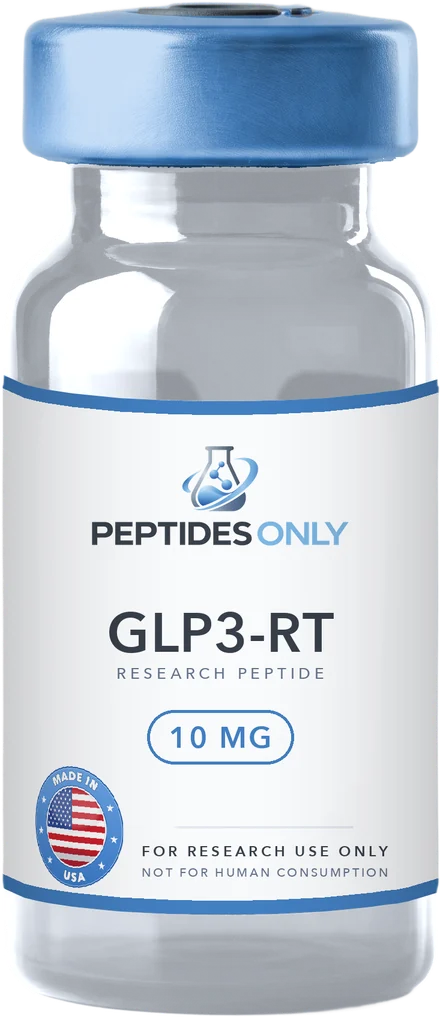
Lyophilized vial
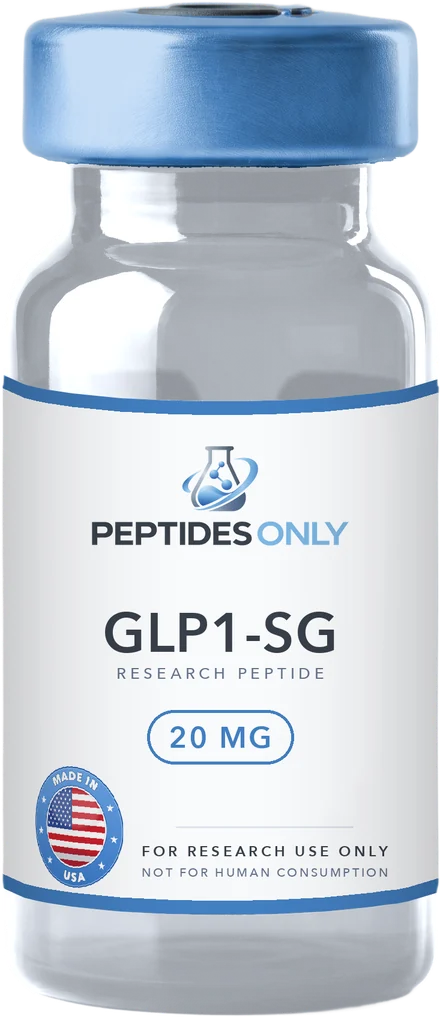
GLP1-SG
Long-acting GLP-1 receptor agonist analogue for metabolic pathway studies.
$160.00

Dual GIP / GLP-1 receptor agonist for incretin-signalling research.
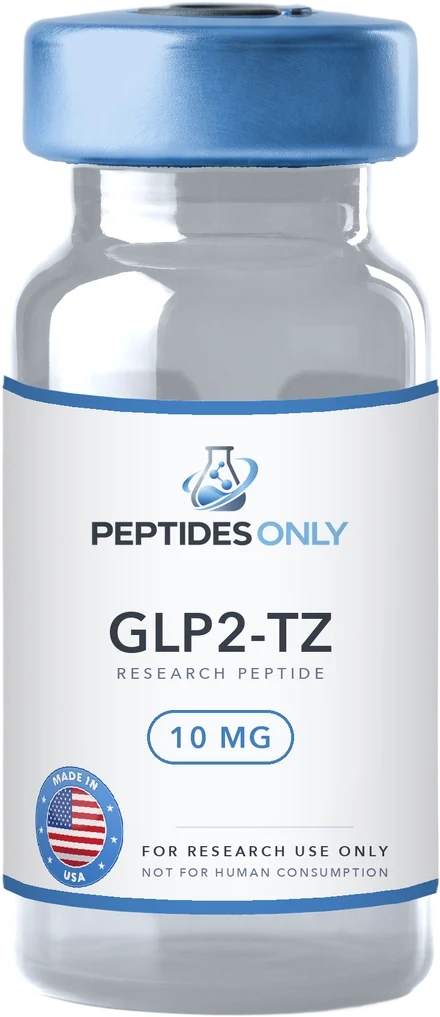
GLP2-TZ 10 mg
Your order ships with the certificate for its own lot. 1 earlier certificate for this size in the COA library.
Dual GIP / GLP-1 receptor agonist for incretin-signalling research.
10 mg per vial, as a lyophilized powder in a sealed glass vial with a crimped cap. The lot number on the label matches the certificate of analysis in the COA library.
Store lyophilized powder frozen (−20 °C) or refrigerated, sealed and away from light. Once reconstituted, keep refrigerated (2–8 °C).
Handle in a laboratory setting using appropriate protective equipment. Consult the certificate of analysis and safety data for lot-specific information.
GLP2-TZ is a 39-residue lipidated peptide that activates two incretin receptors — the glucose-dependent insulinotropic polypeptide (GIP) receptor and the GLP-1 receptor. It is supplied for laboratory research into dual incretin agonism and how the two pathways interact in metabolic regulation.
GIP and GLP-1 are the two incretin hormones: gut peptides released after a meal that amplify glucose-dependent insulin secretion1. GIP is secreted by K-cells of the upper small intestine and GLP-1 by L-cells further down; each acts through its own G protein-coupled receptor1,2.
A dual agonist is a single peptide engineered to activate both receptors. Compounds in this class are typically built on a GIP-like sequence with substitutions that confer GLP-1 receptor activity, plus a fatty-acid side chain for albumin binding and a long half-life2,3.
GIP was long thought to add little on its own, because its insulin-releasing effect is blunted in some metabolic disease models. Combining GIP receptor and GLP-1 receptor activity in one molecule produced effects in research models that were larger than GLP-1 receptor agonism alone, which made dual agonism a major line of metabolic research2,3.
How the GIP receptor contributes is still debated: both agonism and antagonism of that receptor have been reported to affect body weight in different models. Results depend on the exact compound and model. This research compound is not a medicine, has not been evaluated by the FDA, and is sold for laboratory research only.
Two receptors: the GIP receptor and the GLP-1 receptor, both class B G protein-coupled receptors of the incretin system1,2.
A GLP-1 receptor agonist such as GLP1-SG activates one incretin receptor; a dual agonist activates both the GIP and GLP-1 receptors with one molecule2.
10 mg, 30 mg, 60 mg and 100 mg vials of lyophilized peptide, each lot with its own certificate.
Sealed vials of lyophilized peptide are kept frozen (−20 °C) or refrigerated, dry and away from light. Peptide storage and stability explains why.
Every lot is tested by an independent laboratory for identity (mass spectrometry) and purity (HPLC). The certificate for the lot on your vial is published in the COA library and linked from this page.
Research summary reviewed 2026-10-26 against the cited literature.
Operated by DND Wellness LLC · 1309 Coffeen Ave, Suite 1200, Sheridan, WY 82801.
support@peptides-only.com · (508) 404-8124
Use the chat widget to ask a question. Informational and promotional text messages require separate, optional consent. Message frequency varies. Msg & data rates may apply. Reply STOP to unsubscribe or HELP for help. Consent is not a condition of purchase. 21+.
SMS consent & support · SMS terms & Terms of Service · Privacy Policy