
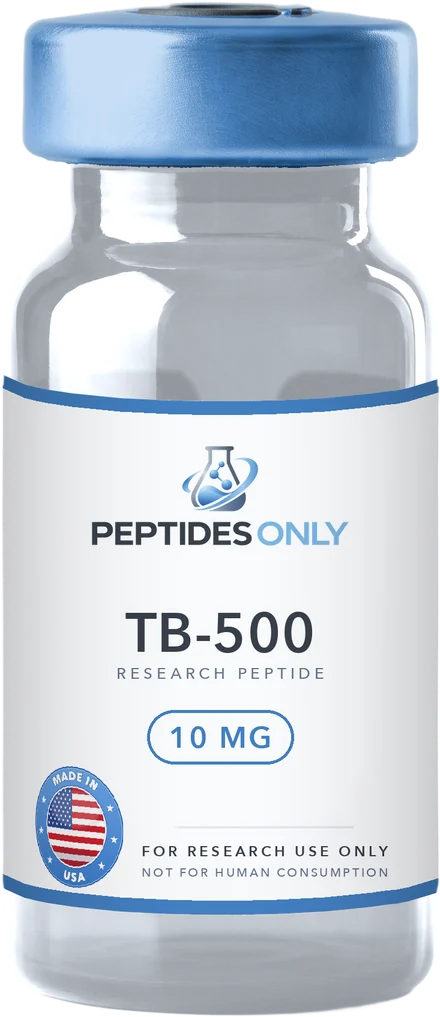
Peptides · Recovery & Repair
TB-500
99.859% purity · Lot 600001 · tested Feb 20, 2026CAS885340-08-9FormulaC38H68N10O14MW889.02
Thymosin beta-4 fragment studied for cell migration and repair.
- Independently tested
- Lot-matched COA
- Lyophilized for stability
- Ships from the USA
Research use only. Not for human or veterinary use. Sold to qualified researchers aged 21+.
$120.00
1
Lot-matched documentation. Every order ships with the certificate for its lot. If a vial arrives damaged or doesn't match its paperwork, tell us within 72 hours and we'll replace it.
Latest lab results
Third-party testedTB-500 10 mg
- Purity (HPLC-UV)
- 99.859%
- Identity (LC-MS)
- Confirmed — Thymosin Beta-4
- Net content
- 10.85 mg (label 10 mg)
- Lot
- 600001
- Tested
- Feb 20, 2026
- Lab
- Freedom Diagnostics Testing
Your order ships with the certificate for its own lot. 1 earlier certificate for this size in the COA library.
About TB-500
Thymosin beta-4 fragment studied for cell migration and repair.
Supplied as
10 mg per vial, as a lyophilized powder in a sealed glass vial with a crimped cap. The lot number on the label matches the certificate of analysis in the COA library.
Storage and handling
Store lyophilized powder frozen (−20 °C) or refrigerated, sealed and away from light. Once reconstituted, keep refrigerated (2–8 °C).
Handle in a laboratory setting using appropriate protective equipment. Consult the certificate of analysis and safety data for lot-specific information.
Important research notice. This product is intended solely for in-vitro and laboratory research. It is not a drug, food, supplement or cosmetic, has not been evaluated by the FDA, and must not be used in humans or animals. Peptides Only does not provide usage or dosing information.
Research summary
TB-500 is a synthetic seven-amino-acid peptide, Ac-Leu-Lys-Lys-Thr-Glu-Thr-Gln (Ac-LKKTETQ), that corresponds to residues 17 to 23 of thymosin beta-4 with an acetylated N-terminus. That short stretch contains thymosin beta-4's actin-binding motif, the region linked to cell migration and angiogenesis. TB-500 is not the full 43-amino-acid protein: much of the research quoted for it was done with full-length thymosin beta-4, and studies of the fragment itself are few and preclinical.
- Also known as
- TB500 · thymosin beta-4 fragment · Ac-LKKTETQ · thymosin beta-4 (17-23) · N-acetyl LKKTETQ
- Sequence
- Ac-Leu-Lys-Lys-Thr-Glu-Thr-Gln
What is TB-500?
TB-500 appears in the anti-doping literature as a veterinary preparation. Laboratories analyzing it identified its key ingredient as the N-terminally acetylated 17-23 fragment of human thymosin beta-4, Ac-LKKTETQ, with the acetyl group added synthetically1,2. The parent protein, thymosin beta-4, is a 43-amino-acid peptide found in essentially all cells and body fluids and is the major actin-sequestering molecule in eukaryotic cells; the sequence LKKTETQ lies in its central actin-binding domain3.
The TB-500 supplied here matches that fragment: seven residues with a molecular weight of about 889 Da, as shown in the specification. Every lot ships with a lot-matched certificate of analysis (HPLC purity and mass-spec identity) from an independent lab, published in the certificate library. That matters in this category, because the biological effects of the fragment itself are poorly documented4 and products sold online under the TB-500 name have not always contained what their labels described5.
TB-500 vs thymosin beta-4: keeping the evidence straight
Thymosin beta-4 has a long research record as a repair-associated protein. It is released by platelets, macrophages and other cells after injury, binds actin and promotes cell migration6. In rats, full-length thymosin beta-4 applied topically or given intraperitoneally increased re-epithelialization, wound contraction, collagen deposition and angiogenesis in full-thickness skin wounds7. In mice, it formed a complex with PINCH and integrin-linked kinase, activated Akt, and was associated with better cardiac function after coronary artery ligation8.
Those findings belong to the 43-residue protein. They apply to TB-500 only to the extent that the fragment reproduces the protein's activity, which has been tested directly in a small number of studies, described below. The Thymosin Alpha-1 vs Thymosin Beta-4 article explains how thymosin beta-4 differs from the unrelated thymosin alpha-1.
What the research on the fragment has examined
Direct studies of LKKTETQ and TB-500 fall into four groups:
- Angiogenesis: an NIH group found that a seven-amino-acid actin-binding motif was essential for thymosin beta-4's angiogenic activity. The motif and the full protein showed near-identical activity in endothelial cell migration and aortic-ring sprouting assays, while peptides lacking any part of the motif were inactive9.
- Skin wounds: in aged mice, the synthetic seven-residue peptide LKKTETQ promoted dermal wound repair comparably to the parent molecule10.
- Tendon: in a 2026 rat Achilles tendon repair study, the TB-500 group showed significantly higher maximum load to failure and better histological scores than controls at four weeks11.
- Metabolism: in rats given TB-500, Ac-LK was the main metabolite in the first six hours and Ac-LKK was detectable for up to 72 hours. In fibroblast assays only the metabolite Ac-LKKTE, not the parent peptide, showed significant wound-closure activity, and the authors suggested that earlier reported activity may come from that metabolite4.
Human research
We found no published clinical trial of the TB-500 fragment itself. Clinical work has used full-length thymosin beta-4; for example, a small randomized, placebo-controlled phase 2 trial tested thymosin beta-4 eye drops (RGN-259) in nine patients with severe dry eye12. Results from the full-length protein cannot be assumed to carry over to a seven-residue fragment.
Limitations of the evidence
Direct studies of the fragment are few, small and preclinical9,10,11. The only tendon study used eight rats per group, measured a single four-week time point and was described by its authors as exploratory11. Metabolism data show the parent peptide is broken down into shorter fragments and suggest that some activity may reside in them4. Product quality is a further problem: a 2023 analysis of TB500 and TB1000 products bought online found contents that did not consistently match their descriptions5.
For a side-by-side with the most commonly paired peptide, see BPC-157 vs TB-500.
TB-500 FAQ
Is TB-500 the same as thymosin beta-4?
No. Thymosin beta-4 is a naturally occurring 43-amino-acid protein3. TB-500 is a synthetic seven-residue fragment of it, Ac-LKKTETQ (residues 17 to 23, N-terminally acetylated), covering the actin-binding motif1. Studies of the full protein should not be read as studies of TB-500.
What is the amino acid sequence of TB-500?
Anti-doping laboratories identified the key ingredient of TB-500 as Ac-Leu-Lys-Lys-Thr-Glu-Thr-Gln (Ac-LKKTETQ), the 17-23 fragment of thymosin beta-4 with an artificially acetylated N-terminus1,2.
Is TB-500 approved by the FDA or permitted in sport?
TB-500 is not an FDA-approved drug. The World Anti-Doping Agency's 2026 Prohibited List names thymosin beta-4 and its derivatives, such as TB-500, in class S2 (peptide hormones, growth factors, related substances and mimetics), which is prohibited at all times.
What is the difference between TB-500 and BPC-157?
They are unrelated peptides. TB-500 is a seven-residue fragment of thymosin beta-4; BPC-157 is a 15-residue peptide derived from a gastric juice protein. In the one study that compared them directly, in rat Achilles tendon repair, TB-500 reached statistical significance on biomechanics and histology, BPC-157 trended the same way, and combining them added nothing11. Both are supplied together in the Wolverine Blend.
How is lyophilized TB-500 stored?
Like most lyophilized research peptides, it is generally kept sealed, cold, dry and protected from light. Our peptide storage guide covers the general principles.
Further reading
- BPC-157 vs TB-500: How the Research Compares
- GLOW vs KLOW vs Wolverine: What Is in Each Peptide Blend and What the Research Shows
- Thymosin Alpha-1 vs Thymosin Beta-4 (TB-500): Two Unrelated Peptides
- How to Choose a Research Peptide Supplier: A Vetting Checklist
- How to Read a Peptide COA: A Field-by-Field Guide
- Peptide Sciences Closed: How to Vet a Replacement Research Peptide Supplier
- What Are Research Peptides? Research Use Only (RUO) Explained
References
- Esposito S, Deventer K, et al. Synthesis and characterization of the N-terminal acetylated 17-23 fragment of thymosin beta 4 identified in TB-500, a product suspected to possess doping potential. Drug Test Anal. 2012;4(9):733-8. PubMed 22962027
- Ho EN, Kwok WH, et al. Doping control analysis of TB-500, a synthetic version of an active region of thymosin β₄, in equine urine and plasma by liquid chromatography-mass spectrometry. J Chromatogr A. 2012;1265:57-69. PubMed 23084823
- Sosne G, Qiu P, et al. Biological activities of thymosin beta4 defined by active sites in short peptide sequences. FASEB J. 2010;24(7):2144-51. PubMed 20179146
- Rahaman KA, Muresan AR, et al. Simultaneous quantification of TB-500 and its metabolites in in-vitro experiments and rats by UHPLC-Q-Exactive orbitrap MS/MS and their screening by wound healing activities in-vitro. J Chromatogr B Analyt Technol Biomed Life Sci. 2024;1235:124033. PubMed 38382158
- Delcourt V, Garcia P, et al. TB500/TB1000 and SGF1000: A scientific approach for a better understanding of misbranded and adulterated drugs. Drug Test Anal. 2023;15(4):458-464. PubMed 36482504
- Goldstein AL, Hannappel E, et al. Thymosin β4: a multi-functional regenerative peptide. Basic properties and clinical applications. Expert Opin Biol Ther. 2012;12(1):37-51. PubMed 22074294
- Malinda KM, Sidhu GS, et al. Thymosin beta4 accelerates wound healing. J Invest Dermatol. 1999;113(3):364-8. PubMed 10469335
- Bock-Marquette I, Saxena A, et al. Thymosin beta4 activates integrin-linked kinase and promotes cardiac cell migration, survival and cardiac repair. Nature. 2004;432(7016):466-72. PubMed 15565145
- Philp D, Huff T, et al. The actin binding site on thymosin beta4 promotes angiogenesis. FASEB J. 2003;17(14):2103-5. PubMed 14500546
- Philp D, Badamchian M, et al. Thymosin beta 4 and a synthetic peptide containing its actin-binding domain promote dermal wound repair in db/db diabetic mice and in aged mice. Wound Repair Regen. 2003;11(1):19-24. PubMed 12581423
- Biçer O, Adanir O, et al. Effects of BPC-157 and TB-500 on Achilles tendon healing in rats: A histopathological and biomechanical study. Jt Dis Relat Surg. 2026;37(3):822-837. PubMed 42542926
- Sosne G, Dunn SP, et al. Thymosin β4 significantly improves signs and symptoms of severe dry eye in a phase 2 randomized trial. Cornea. 2015;34(5):491-6. PubMed 25826322
Research summary reviewed 2026-10-26 against the cited literature.
More Peptides
View all You might also need
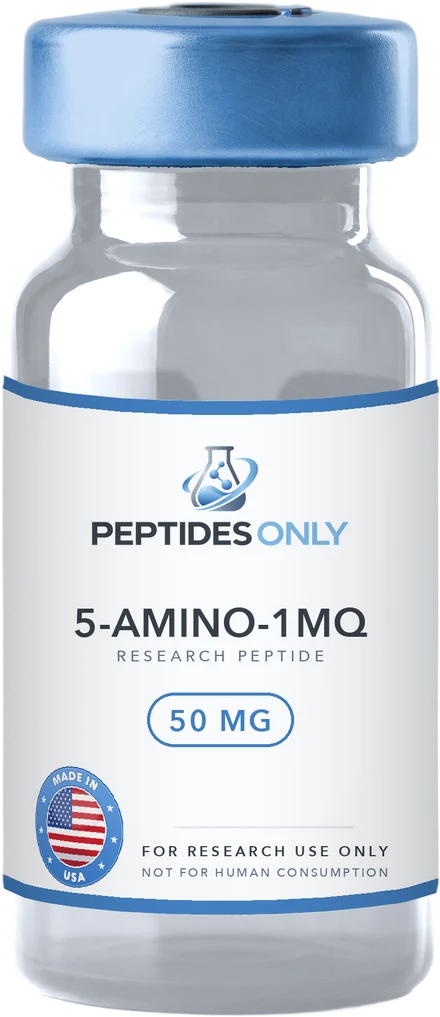
Lyophilized vial
5-Amino-1MQ
Small-molecule NNMT inhibitor studied in cellular energy research.
$115.00
Contact Peptides Only
Operated by DND Wellness LLC · 1309 Coffeen Ave, Suite 1200, Sheridan, WY 82801.
support@peptides-only.com · (508) 404-8124
Use the chat widget to ask a question. Informational and promotional text messages require separate, optional consent. Message frequency varies. Msg & data rates may apply. Reply STOP to unsubscribe or HELP for help. Consent is not a condition of purchase. 21+.
SMS consent & support · SMS terms & Terms of Service · Privacy Policy