
Peptides · Recovery & Repair
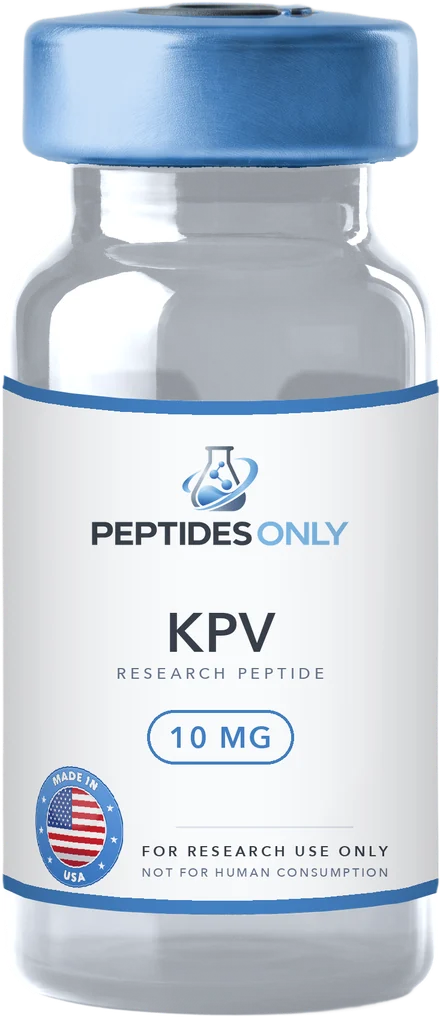
KPV
99.753% purity · Lot KPV1012102025-08 · tested Dec 17, 2025CAS67727-97-3FormulaC16H30N4O4MW342.43
Alpha-MSH derived tripeptide studied in inflammation research.
- Independently tested
- Lot-matched COA
- Lyophilized for stability
- Ships from the USA
Research use only. Not for human or veterinary use. Sold to qualified researchers aged 21+.
$75.00
1
Lot-matched documentation. Every order ships with the certificate for its lot. If a vial arrives damaged or doesn't match its paperwork, tell us within 72 hours and we'll replace it.
Latest lab results
Third-party testedKPV 10 mg
- Purity (HPLC-UV)
- 99.753%
- Identity (LC-MS)
- Confirmed — KPV
- Net content
- 11.67 mg (label 10 mg)
- Lot
- KPV1012102025-08
- Tested
- Dec 17, 2025
- Lab
- Freedom Diagnostics Testing
Your order ships with the certificate for its own lot.
About KPV
Alpha-MSH derived tripeptide studied in inflammation research.
Supplied as
10 mg per vial, as a lyophilized powder in a sealed glass vial with a crimped cap. The lot number on the label matches the certificate of analysis in the COA library.
Storage and handling
Store lyophilized powder frozen (−20 °C) or refrigerated, sealed and away from light. Once reconstituted, keep refrigerated (2–8 °C).
Handle in a laboratory setting using appropriate protective equipment. Consult the certificate of analysis and safety data for lot-specific information.
Important research notice. This product is intended solely for in-vitro and laboratory research. It is not a drug, food, supplement or cosmetic, has not been evaluated by the FDA, and must not be used in humans or animals. Peptides Only does not provide usage or dosing information.
Research summary
KPV is the tripeptide Lys-Pro-Val, the three C-terminal amino acids (positions 11 to 13) of alpha-melanocyte-stimulating hormone (alpha-MSH). Researchers study it because it keeps much of alpha-MSH's anti-inflammatory activity in experimental models without alpha-MSH's pigmentary effect. Most of the published work is in cell culture and mouse models of intestinal inflammation (colitis).
- Also known as
- Lys-Pro-Val · alpha-MSH (11-13) · α-MSH 11-13 · KPV tripeptide
- Sequence
- Lys-Pro-Val
What is KPV?
Alpha-MSH is a 13-amino-acid peptide cleaved from proopiomelanocortin. Best known for its role in pigmentation, it has also been studied for anti-inflammatory and protective effects mediated through melanocortin receptors1. Its C-terminal tripeptide, alpha-MSH(11-13) or KPV, was singled out as an anti-inflammatory candidate because it keeps that activity in experimental models while lacking the pigmentary action that limits alpha-MSH itself1,2.
At three residues and a molecular weight of about 342 Da, KPV is one of the smallest peptides in research use. The KPV supplied here is the unmodified tripeptide as a lyophilized powder, and every lot ships with a lot-matched certificate of analysis (HPLC purity and mass-spec identity) from an independent lab, published in the certificate library.
How KPV is thought to work
Two findings set KPV apart from its parent hormone. First, it appears to act largely without melanocortin receptors. In a mouse peritonitis model, its effect on leukocyte migration was not blocked by an MC3/MC4 receptor antagonist, it did not raise cAMP in macrophages, and it stayed active in mice with a nonfunctional MC1 receptor; the authors proposed inhibition of IL-1beta signaling instead3. Colitis studies reported similar MC1R-independent activity4.
Second, its size lets it enter cells through PepT1, a di- and tripeptide transporter normally expressed in the small intestine and induced in the colon during inflammation. In human intestinal epithelial cells and T cells, nanomolar KPV inhibited NF-κB and MAP kinase signaling and reduced pro-inflammatory cytokine secretion, an effect that depended on PepT15. In human bronchial epithelial cells, KPV entered the nucleus and interfered with nuclear import of the NF-κB subunit p656.
What the research has examined
Most KPV studies use mouse colitis models, with a smaller number in other tissues:
- Chemical colitis: KPV given in drinking water reduced DSS- and TNBS-induced colitis in mice, with lower pro-inflammatory cytokine expression5.
- Immune-mediated colitis: in DSS colitis and CD45RBhi T-cell transfer colitis, KPV-treated mice regained weight sooner and showed less inflammatory infiltrate and myeloperoxidase activity; in mice with a nonfunctional MC1 receptor, all KPV-treated animals survived DSS colitis4.
- Targeted delivery: KPV loaded into nanoparticles inside an alginate-chitosan hydrogel reduced DSS colitis at a concentration about 12,000-fold lower than free KPV in solution7, and hyaluronic-acid-functionalized nanoparticles targeted KPV to colonic epithelial cells and macrophages and, given orally in a hydrogel, reduced colitis in mice8.
- Colitis-associated cancer: in an AOM/DSS mouse model, KPV prevented tumor development in wild-type mice but had no effect in PepT1-knockout mice, supporting the transporter's role9.
- Outside the gut: topical KPV accelerated corneal epithelial wound closure in rabbits through a mechanism that appeared to involve nitric oxide10, and melanocortin researchers have proposed KPV-type peptides as candidates for skin-wound research2.
Limitations of the evidence
We found no human clinical trial of KPV indexed in PubMed; the evidence is cell culture and animal models, chiefly mice. Much of the colitis work, including the PepT1 and nanoparticle studies, comes from one research group5,7,8,9, so independent replication is limited. Several of the strongest results used engineered delivery systems, which may not reflect the behavior of the free peptide7,8. A 2023 review of the melanocortin system in inflammatory bowel disease notes that the evidence for these peptides comes largely from mouse colitis models11.
For how KPV compares with the most-studied gastric repair peptide, see KPV vs BPC-157. KPV is also one of the four components of the KLOW Blend.
KPV FAQ
Is KPV the same as alpha-MSH?
No. KPV is only the last three amino acids (Lys-Pro-Val, positions 11 to 13) of the 13-residue hormone alpha-MSH1. It keeps anti-inflammatory activity in experimental models but lacks alpha-MSH's pigmentary effect, and it appears to act largely without melanocortin receptors1,3.
How does KPV get into cells?
In intestinal epithelial and immune cells, KPV is carried in by PepT1, the transporter that normally absorbs di- and tripeptides from food. Cell studies indicated that its anti-inflammatory effect depends on PepT15, and KPV had no effect on tumor development in PepT1-knockout mice9.
Is KPV approved by the FDA?
No. KPV is not an approved drug, and we found no published human trials. It is not named on the World Anti-Doping Agency's 2026 Prohibited List, although WADA's class S0 covers any pharmacological substance without government approval for human therapeutic use.
What is the difference between KPV and BPC-157?
KPV is a three-residue fragment of alpha-MSH studied mainly as an inhibitor of inflammatory signaling in mouse colitis5. BPC-157 is a 15-residue gastric peptide studied more broadly in tissue-repair models. Their research overlaps in gut inflammation, which is covered in KPV vs BPC-157.
How is lyophilized KPV stored?
Like most lyophilized research peptides, it is generally kept sealed, cold, dry and protected from light. Our peptide storage guide covers the general principles.
Further reading
References
- Brzoska T, Luger TA, et al. Alpha-melanocyte-stimulating hormone and related tripeptides: biochemistry, antiinflammatory and protective effects in vitro and in vivo, and future perspectives for the treatment of immune-mediated inflammatory diseases. Endocr Rev. 2008;29(5):581-602. PubMed 18612139
- Böhm M, Luger T. Are melanocortin peptides future therapeutics for cutaneous wound healing? Exp Dermatol. 2019;28(3):219-224. PubMed 30661264
- Getting SJ, Schiöth HB, et al. Dissection of the anti-inflammatory effect of the core and C-terminal (KPV) alpha-melanocyte-stimulating hormone peptides. J Pharmacol Exp Ther. 2003;306(2):631-7. PubMed 12750433
- Kannengiesser K, Maaser C, et al. Melanocortin-derived tripeptide KPV has anti-inflammatory potential in murine models of inflammatory bowel disease. Inflamm Bowel Dis. 2008;14(3):324-31. PubMed 18092346
- Dalmasso G, Charrier-Hisamuddin L, et al. PepT1-mediated tripeptide KPV uptake reduces intestinal inflammation. Gastroenterology. 2008;134(1):166-78. PubMed 18061177
- Land SC. Inhibition of cellular and systemic inflammation cues in human bronchial epithelial cells by melanocortin-related peptides: mechanism of KPV action and a role for MC3R agonists. Int J Physiol Pathophysiol Pharmacol. 2012;4(2):59-73. PubMed 22837805
- Laroui H, Dalmasso G, et al. Drug-loaded nanoparticles targeted to the colon with polysaccharide hydrogel reduce colitis in a mouse model. Gastroenterology. 2010;138(3):843-53.e1-2. PubMed 19909746
- Xiao B, Xu Z, et al. Orally Targeted Delivery of Tripeptide KPV via Hyaluronic Acid-Functionalized Nanoparticles Efficiently Alleviates Ulcerative Colitis. Mol Ther. 2017;25(7):1628-1640. PubMed 28143741
- Viennois E, Ingersoll SA, et al. Critical role of PepT1 in promoting colitis-associated cancer and therapeutic benefits of the anti-inflammatory PepT1-mediated tripeptide KPV in a murine model. Cell Mol Gastroenterol Hepatol. 2016;2(3):340-357. PubMed 27458604
- Bonfiglio V, Camillieri G, et al. Effects of the COOH-terminal tripeptide alpha-MSH(11-13) on corneal epithelial wound healing: role of nitric oxide. Exp Eye Res. 2006;83(6):1366-72. PubMed 16965771
- Gravina AG, Pellegrino R, et al. The Melanocortin System in Inflammatory Bowel Diseases: Insights into Its Mechanisms and Therapeutic Potentials. Cells. 2023;12(14):1889. PubMed 37508552
Research summary reviewed 2026-10-26 against the cited literature.
More Peptides
View all You might also need
Contact Peptides Only
Operated by DND Wellness LLC · 1309 Coffeen Ave, Suite 1200, Sheridan, WY 82801.
support@peptides-only.com · (508) 404-8124
Use the chat widget to ask a question. Informational and promotional text messages require separate, optional consent. Message frequency varies. Msg & data rates may apply. Reply STOP to unsubscribe or HELP for help. Consent is not a condition of purchase. 21+.
SMS consent & support · SMS terms & Terms of Service · Privacy Policy